SYNOPSIS
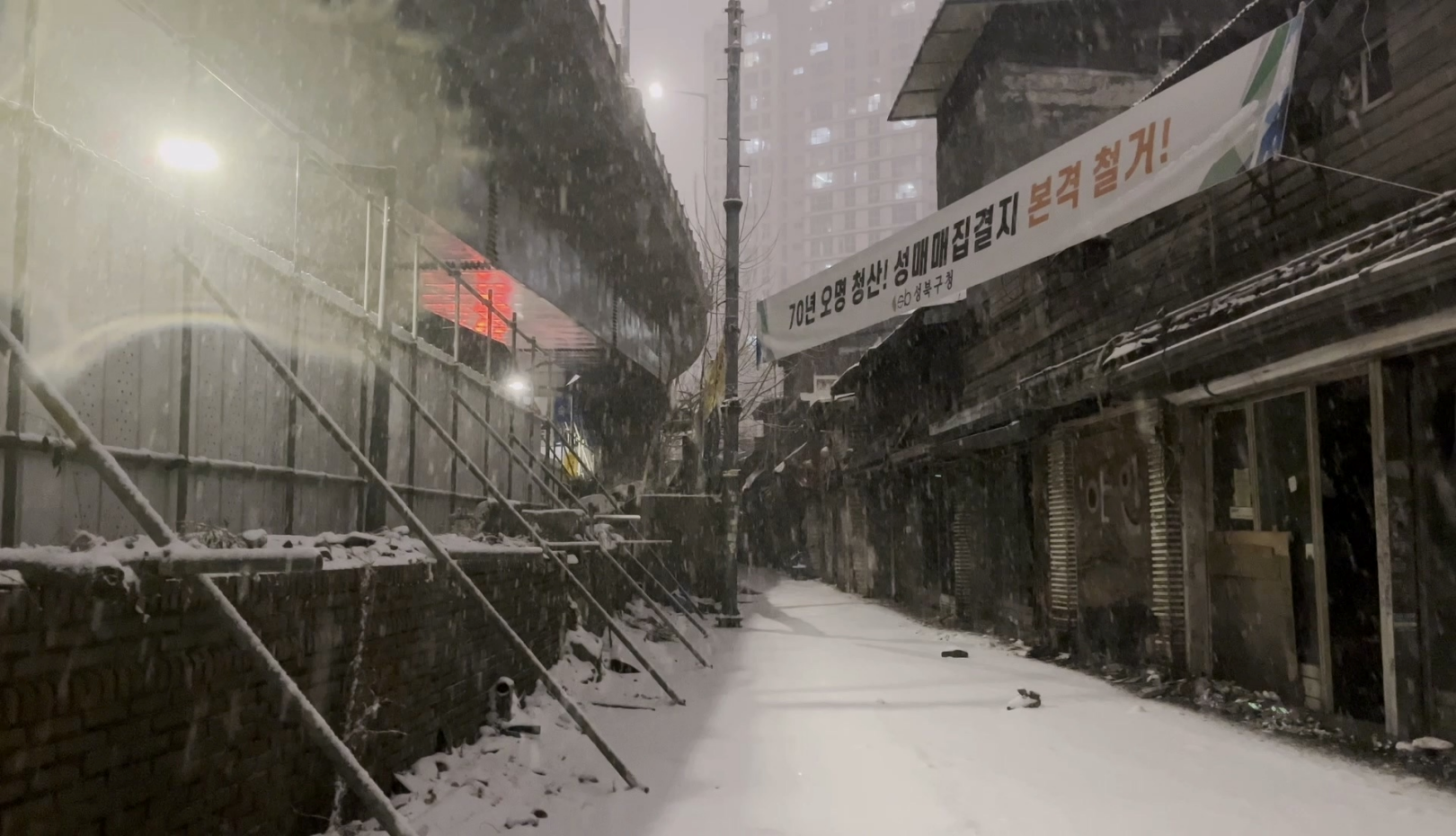
The story hidden behind the banner: “Erasing 70 years of disgrace! Full-scale demolition of the red-light district!”
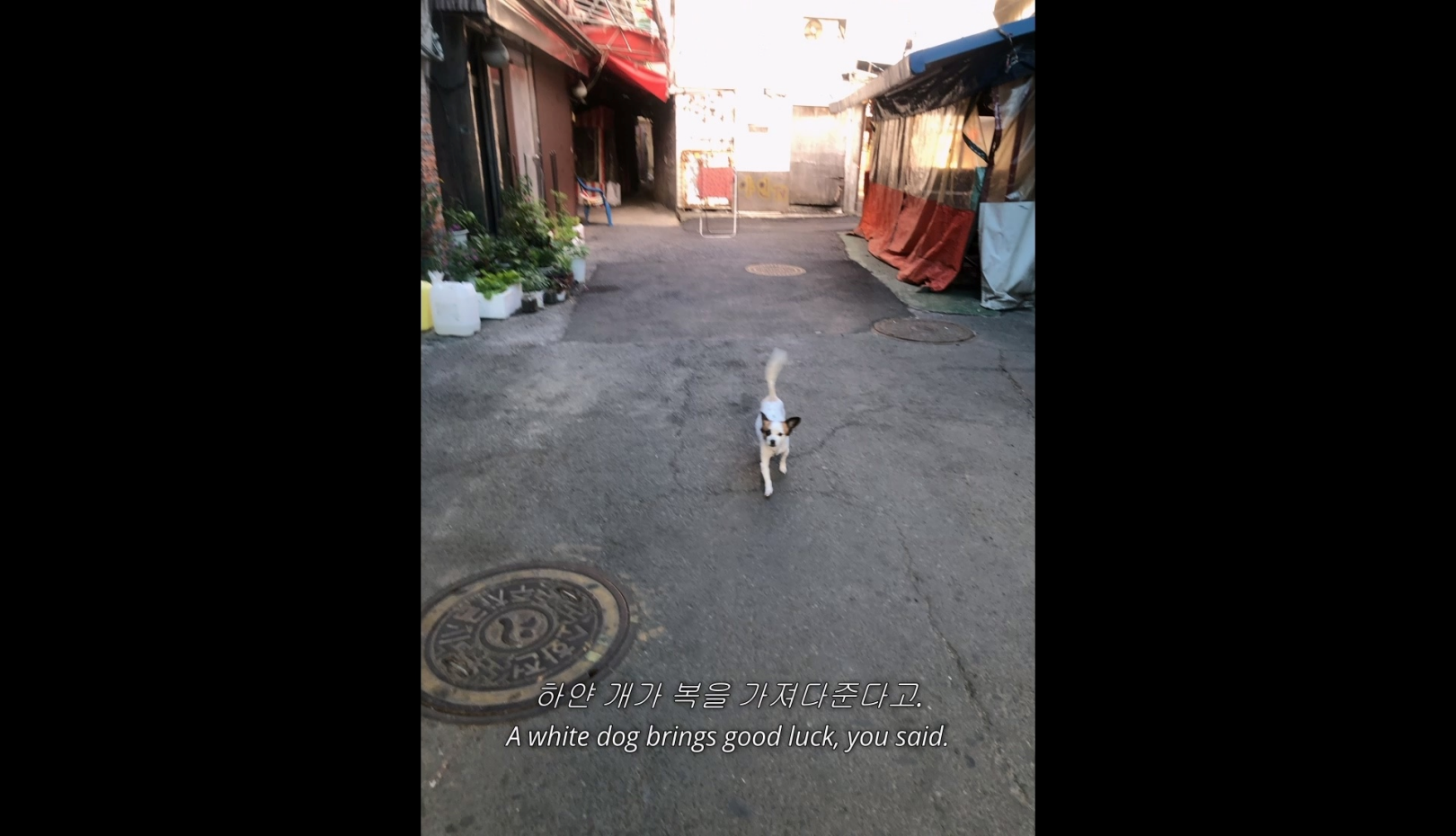
Part 1. The Alley — Auntie, you said misfortune leaves a smell in the rice cooker, right?
Part 2. The Struggle — Workers demand relocation measures amid redevelopment.
Part 3. Auntie — A conversation with an “entrance auntie” who worked in Miari Texas for 30 years.
REVIEW
Miari Texas addresses the struggle of sex workers evicted without adequate compensation during the redevelopment of Seoul's Miari red-light district, and their sense of dwelling there. Under the management and disposal plan that allocates redevelopment rights, sex workers long settled in the area and the "front-door aunties" are excluded because they are neither property owners nor legal tenants. Where stigma makes even showing one's face difficult, Jang Yunmi refuses conventional aesthetic objectification and chooses instead an oblique aesthetic of collecting and participating.
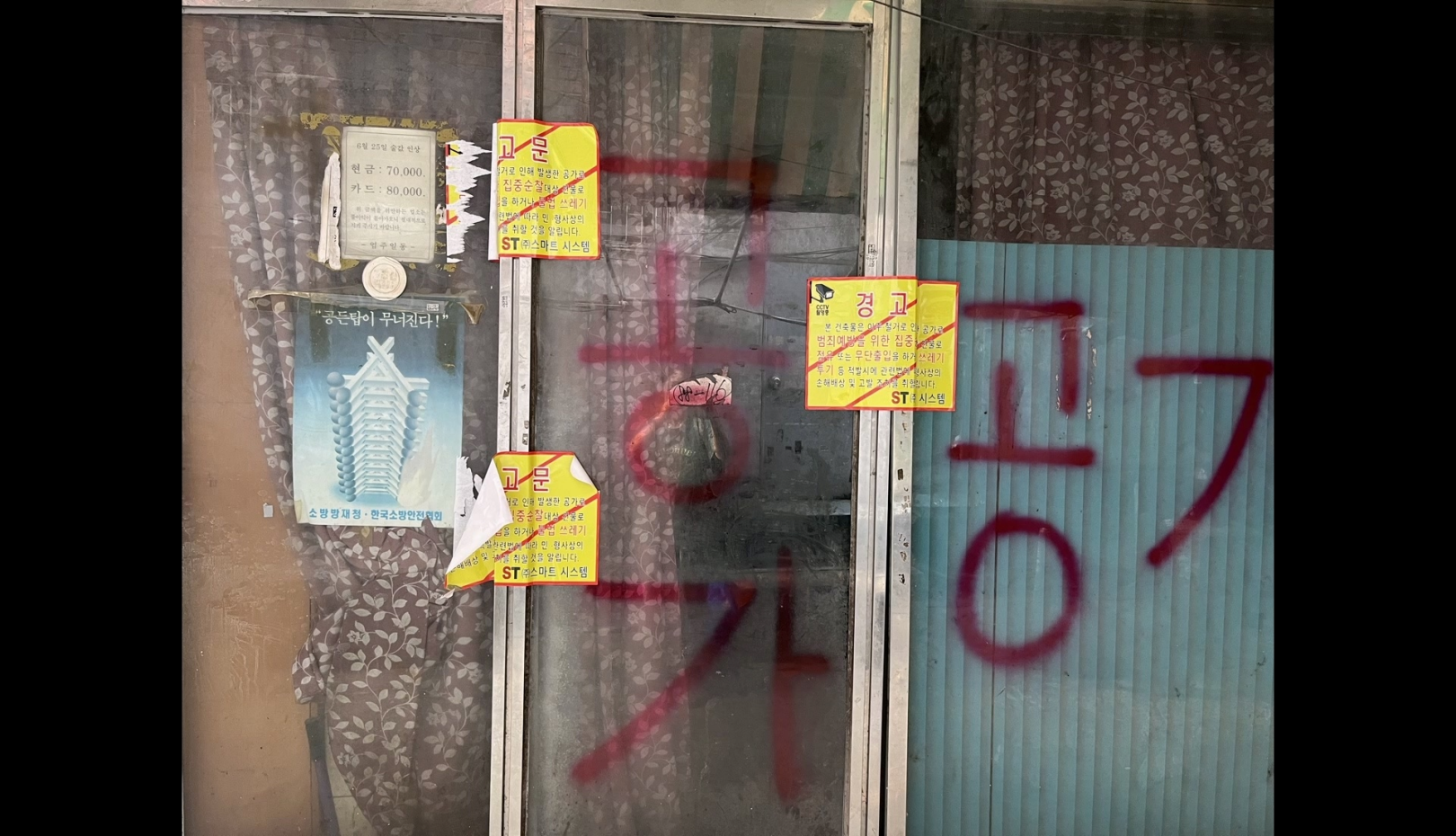
Through offhand mobile-phone stills and a strategy of tension in the sound, the film archives the materiality of a ruined place and the narratives of lives lived there. Part One, "The Alley," takes the form of a letter; Part Two, "The Struggle," positions the filmmaker not as an observer recording demonstrations but as a participant in solidarity; Part Three, "Auntie," bears witness to Miari's ecology. Reconstructing the human faces erased by redevelopment—the language of law and capital—out of images and sounds of abandoned things and traces of relationships, the film becomes a record of solidarity with those who fought to the last of their dignity in a world falling to ruin. (CHO Hyeyoung)
DIRECTOR'S NOTE
As of July 2026, Miari Texas, once the largest red-light district in South Korea, is being demolished. It is widely regarded as a place that should disappear, or as a place whose disappearance does not matter. Backed by this perception, redevelopment is replacing the neighborhood with new towns and high-rise mixed-use residential complexes. In most cases, redevelopment reinforces inequality and makes those who are already vulnerable even more vulnerable. I wanted to speak about a specific place that cannot be spoken of carelessly. I was also interested in the women who remained there until the end. I was fortunate enough to meet them: women who fought to live their own lives.
CONTACT
JANG Yunmi | ymjang@naver.com