SYNOPSIS
Along a Kazakh river, women lay bare love, rage, and survival. Their voices cut through water and silence, turning scars into resistance. Tenderness becomes defiance. Enter the river. Dream dangerously.
REVIEW
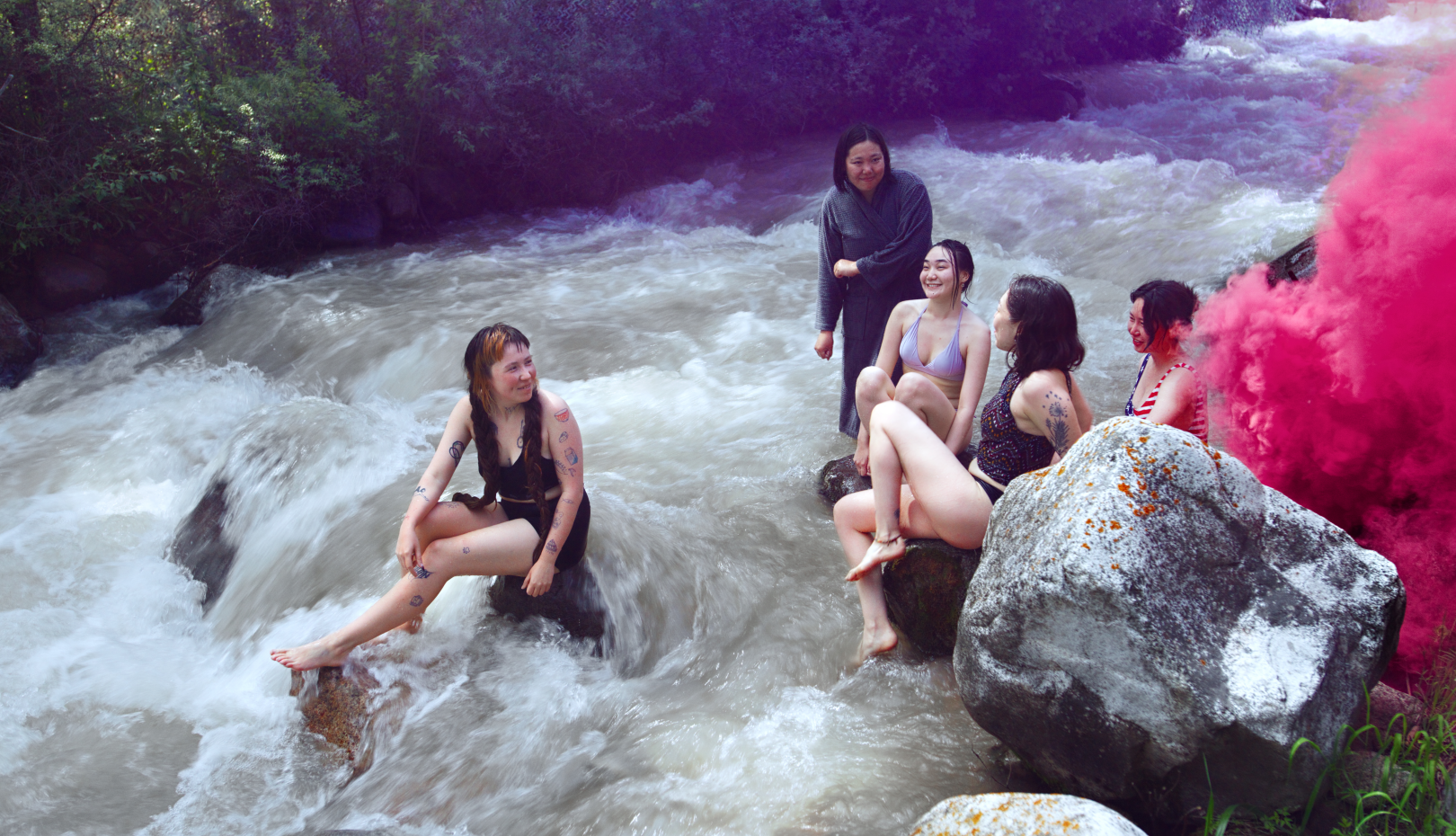
Kristina Mikhailova’s River Dreams is a poetic documentary that records women’s voices and memories along the rivers of Kazakhstan. The film asks them a simple question: “What kind of river are you?” More than a metaphor, the question becomes a cinematic device that allows each woman to articulate, in her own language, the life she has lived, the emotions she carries, and memories long suppressed. Gathering by the river, the women speak of love and anger, wounds and survival, releasing what has remained inside them into the water’s flowing current.
Mikhailova does not treat the river as a natural landscape existing apart from human life. The women enter the water themselves and encounter its movement, while the river receives their voices and becomes a presence that flows with them. Through dreamlike images and rhythms, individual confessions become gestures toward moving forward. Experiences shared as women meet the nonhuman presence of the river, transforming private pain into a sense of solidarity.
River Dreams captures the emergence of a new subjectivity within a relationship of mutual influence between human beings and nature, suggesting how wounds and memories might be transformed into new currents of life. Where nature may elsewhere be treated as an object of development and conquest, here the river becomes an ecological companion that flows and resonates alongside human lives.
DIRECTOR'S NOTE
River Dreams is a political poem about being a young woman in Kazakhstan. Exploring the 130-kilometer course of the Aksay River, I imagined the water as a living girl. Through improvised encounters with women under thirty along its banks, starting with “What kind of river are you?”, their voices formed a polyphony. Seeing myself as an artist rather than a documentary director, I created a hybrid film that transgresses genre boundaries. Told through a female gaze, this is a love-hate letter to Kazakhstan and an act of resistance. It floods the screen with strength, rage, pain, and radical tenderness, using absolute sincerity as a disarming weapon to step fearlessly into the self’s abyss.
CONTACT
Axelle JEAN | axelle@cinephil.com